


Becoming a United States citizen is one of the most meaningful milestones in an immigrant’s journey. For many permanent residents, the path begins with lawful residency and leads to full civic participation, security, and opportunity. If you are exploring US citizenship with a green card, understanding the process clearly in 2026 is essential, especially as immigration procedures continue to evolve.
This guide is designed to walk you through every stage of applying for citizenship with confidence.
Understanding US Citizenship With Green Card Eligibility in 2026
Before starting the application process, it is important to confirm whether you meet the eligibility requirements. While individual circumstances vary, most applicants follow the standard naturalization pathway.
Basic Eligibility Requirements
In 2026, applicants must generally meet the following criteria:
-
Be at least 18 years old at the time of filing.
-
Hold lawful permanent resident status.
-
Have maintained continuous residence in the United States.
-
Meet physical presence requirements.
-
Demonstrate good moral character.
-
Show basic proficiency in English.
-
Pass US civics and history tests.
-
Demonstrate attachment to the principles of the US Constitution.
Most green card holders are eligible after five years of permanent residence. Those married to US citizens may qualify after three years, provided all conditions are met.
Thinking about becoming an EB-5 investor? Your path to citizenship has unique advantages. Discover our guide to US citizenship through EB-5.
Continuous Residence and Physical Presence Explained
Continuous residence refers to maintaining a primary home in the United States. Physical presence refers to the actual number of days you have spent in the country.
In most cases, applicants must:
-
Reside continuously in the US for five years
-
Be physically present for at least 30 months during that period
-
Avoid trips longer than six months without strong justification
Careful travel planning and record keeping are critical. Even unintentional absences can delay eligibility.
Investment-based green card holders should also ensure they’ve properly removed conditions on their status. Check out our guide on EB-5 Conditional Green Card vs Permanent Green Card
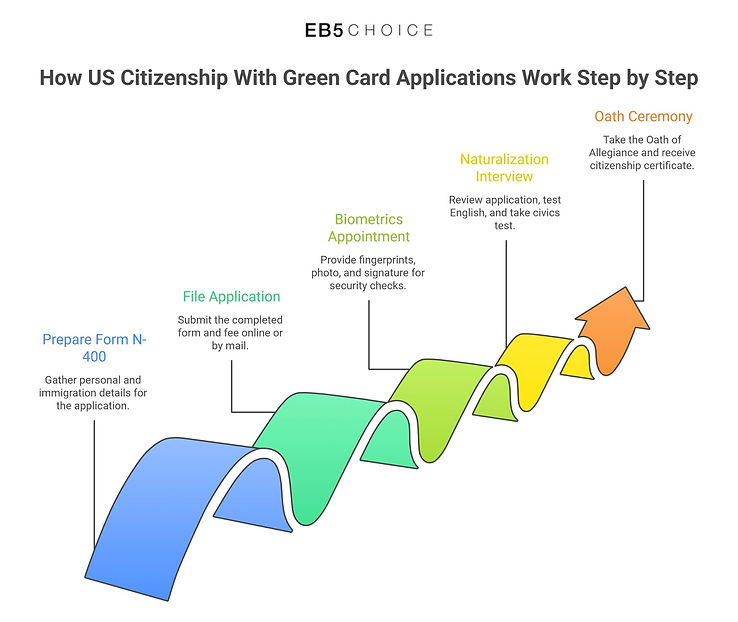
How US Citizenship With Green Card Applications Work Step by Step
Applying for citizenship is a structured process. Understanding each step in advance can reduce stress and help avoid delays.
Step 1: Preparing Form N-400
Form N-400 is the official Application for Naturalization. Accuracy is essential. The form requires detailed information about:
-
Personal background
-
Immigration history
-
Employment and travel records
-
Family details
-
Moral character disclosures
Any inconsistencies between your N-400 and past immigration filings may raise concerns during review.
Step 2: Filing the Application
Once completed, the application is filed online or by mail along with the required filing fee. Fee waivers may be available for qualifying applicants.
After submission, you will receive a receipt notice confirming that your application has been accepted for processing.
Step 3: Biometrics Appointment
Applicants are scheduled for biometrics collection, which includes fingerprints, photographs, and signature verification. This step is used for background and security checks.
Attendance is mandatory. Rescheduling is possible but should be avoided when possible to prevent delays.
Step 4: Naturalization Interview
The interview is a key milestone. During this appointment, a USCIS officer will:
-
Review your application
-
Verify your identity
-
Test your English language skills
-
Administer the civics test
Preparation is crucial, but most applicants who study and answer honestly perform well.
Step 5: Decision and Oath Ceremony
If approved, you will receive a notice for the Oath of Allegiance ceremony. This final step
officially grants citizenship and allows you to receive your Certificate of Naturalization.
Special Considerations for Investors and Business-Based Green Card Holders
Not all green cards are obtained through employment or family sponsorship. Some applicants become permanent residents through investment pathways, which may carry unique considerations.
Individuals who obtained a US green card through investment must ensure that all conditional requirements were properly resolved before applying for naturalization. This includes maintaining lawful status and compliance throughout the investment period.
Those who invested in projects located within a targeted employment area may already be familiar with how regional economic classifications affect immigration benefits. While these designations do not change the citizenship process directly, accurate documentation of your immigration history remains essential.
Applicants connected to EB-5 regional centers should confirm that all conditions related to their investment were satisfied and documented well before submitting Form N-400.
Common Mistakes That Delay Citizenship Applications
Even qualified applicants can face delays if avoidable errors occur. Being aware of common pitfalls can save months of processing time.
-
Incomplete or Inaccurate Forms
Missing information, incorrect dates, or inconsistent answers can trigger requests for evidence or interview complications.
-
Failure to Disclose Information
All arrests, citations, and legal issues must be disclosed, even if they were dismissed or occurred many years ago. Transparency is critical.
-
Excessive Travel Without Explanation
Extended trips abroad without proper documentation can disrupt continuous residence and lead to denial or delays.
-
Poor Interview Preparation
Many applicants underestimate the civics and English requirements. Regular study and practice make a significant difference.
Rights and Benefits After Becoming a US Citizen
Citizenship offers meaningful advantages beyond permanent residency.
Key Benefits Include
-
The right to vote in federal elections
-
Eligibility for federal jobs
-
Protection from deportation
-
Ability to sponsor more family members
-
Access to certain government benefits
-
A US passport for international travel
Citizens also gain the ability to participate fully in civic life and contribute to shaping the country’s future.
Consulting an experienced EB-5 investment advisor or immigration professional can help clarify complex financial or compliance questions tied to earlier filings.
To better understand what you currently have access to and how citizenship complements those rights, explore: Key Benefits for Green Card Holders in the USA
Final Thoughts on Applying for US Citizenship in 2026
Applying for us citizenship with green card status is more than a legal process. It is a personal journey that reflects years of commitment, compliance, and contribution to the United States. With proper preparation, accurate documentation, and a clear understanding of each step, most applicants successfully reach the finish line.
This guide is intended to empower you with clarity and confidence. Every case is unique, but knowledge remains the strongest foundation. Take the time to prepare, ask questions when needed, and approach the process with patience and purpose. The reward is not just a status change, but a permanent place in the American story.